


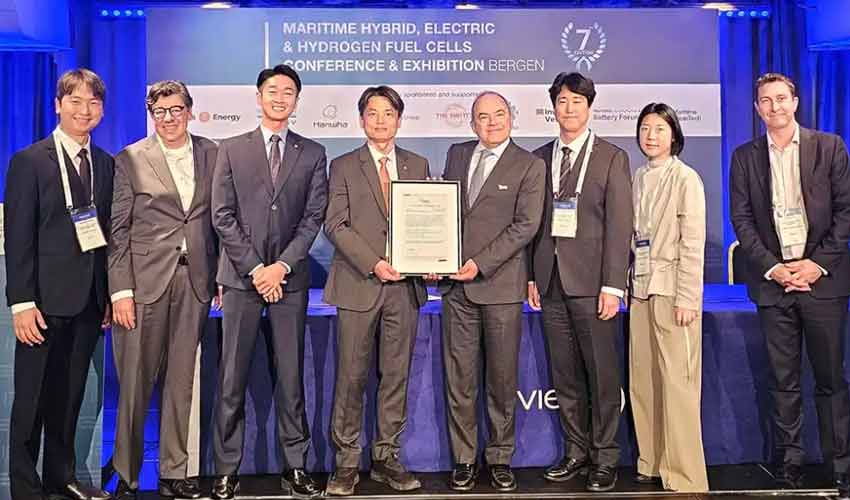
The newly approved design concept features a fully electric container vessel powered by a large-scale 151 MWh energy storage system (ESS). Electrical energy stored in containerized battery units serves as the vessel’s primary propulsion source, enabling operation without direct carbon emissions through the use of port charging infrastructure. The use of containerized batteries, which can be handled and stowed like standard cargo containers, enhances space efficiency, maximizes cargo capacity, and optimizes overall vessel performance. This approach also supports flexible battery replacement and scalable operation, offering a practical pathway for the decarbonization of short-sea and regional container transport.
The AiP strengthens Hanwha Power’s capabilities in fully electric vessel design using large-scale battery energy storage and expands its portfolio of marine propulsion solutions. The company plans to build on this achievement to pursue opportunities in the next-generation zero-carbon maritime transport market. Alongside the approval, Hanwha Power has also completed the basic design for a 1,000 TEU battery-powered container vessel. Building on its expertise in vessel design across multiple ship classes, the company aims to develop a comprehensive lineup of electric-propulsion vessels tailored to a wide range of operating conditions and customer needs.
This news/story/article has not been written/edited by World Media Organization and is sourced from a syndicated feed.